A smarter dustbin that segregates wet and dry waste automatically — and converts the wet half into compost you can use on your plants.
Most households know they should separate wet and dry waste. Most don't, because it requires two bins, mental effort, and consistent discipline — and one missed slip undoes the whole effort. The result: organic waste rotting in landfills, releasing methane, instead of becoming fertilizer.
The right design move wasn't to scold people. It was to make segregation invisible.
ORGANICO/HERO.JPGOrganico is a dustbin that segregates waste automatically — drop anything in, it sorts itself. The wet waste then goes through a built-in composting process. By the time the bin is full, you have finished compost ready for plants.
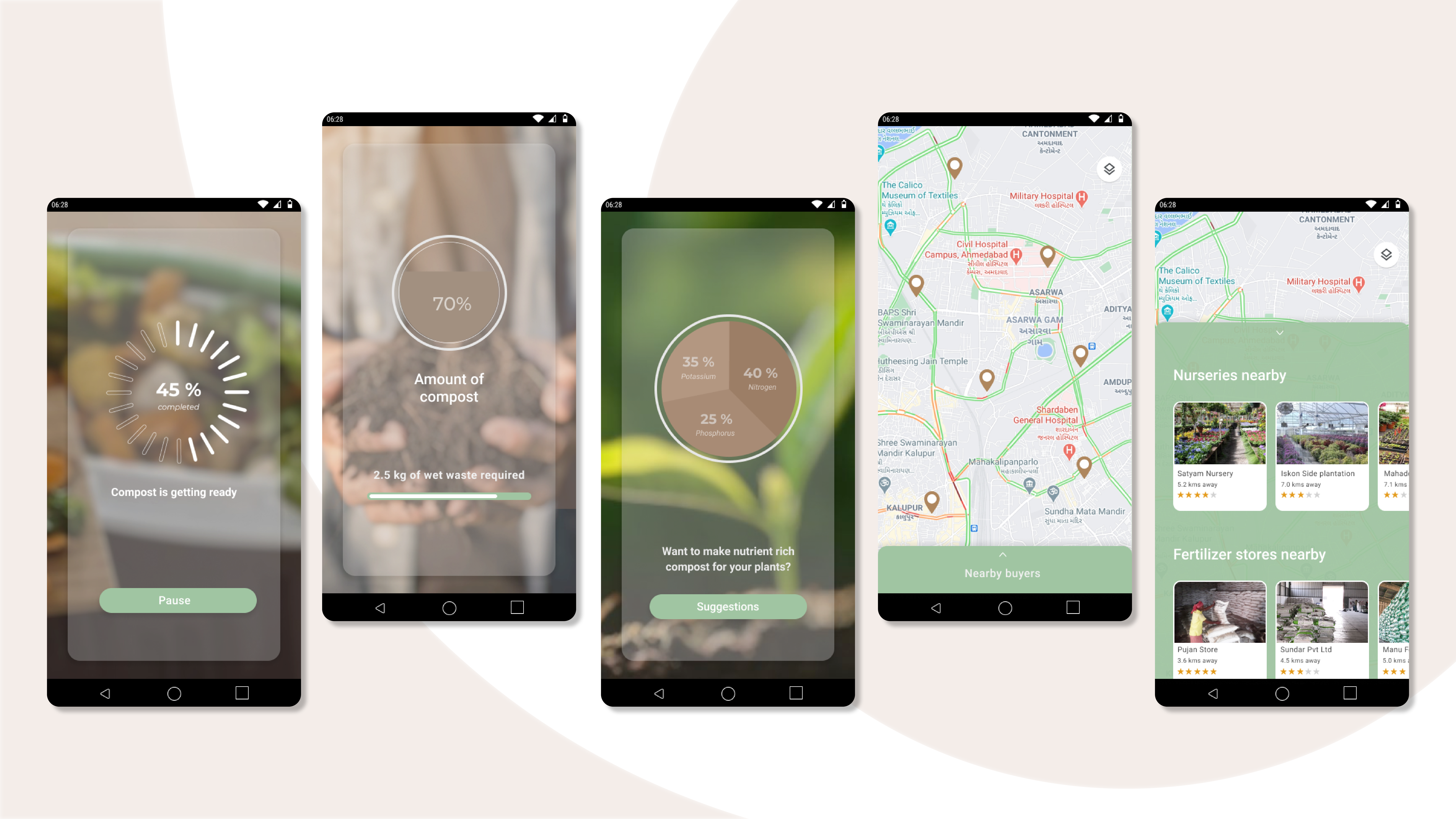
The interface shows you what matters at a glance: how much compost is ready, how long the next batch will take, what the nutrient value is, and where the nearest people who'll buy your compost live. Designed for someone who wants to do the right thing without it becoming a hobby.
ORGANICO/USER-FLOW.JPG
ORGANICO/WIREFRAMES.JPGOrganico is a 24-week student project, but the lesson stayed with me: sustainability fails when it requires sustained effort. The interventions that scale are the ones that disappear into existing habits. Don't make people care more — make caring easier than not caring.
That principle showed up later in Padcare (designing recycling that fits into a workplace bathroom routine) and at Bracetek (designing systems where staff can't accidentally skip a step). Organico is where I first internalized it.
Sustainability that needs effort doesn't scale. Design has to do the work, not the user.
I design for people who want to do the right thing — without making it their full-time job.