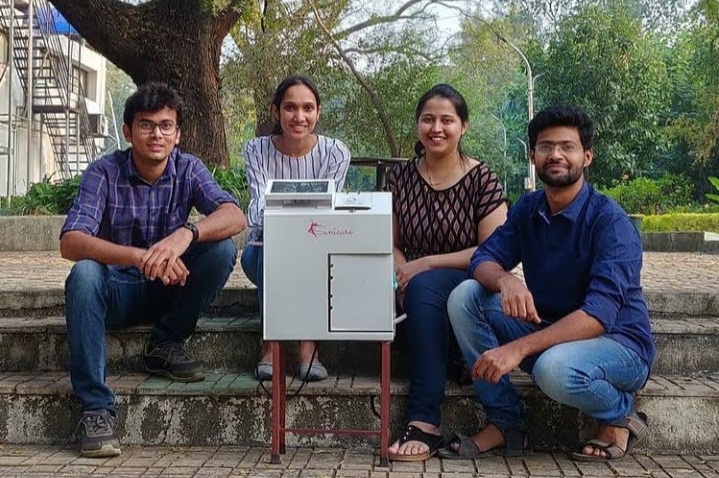
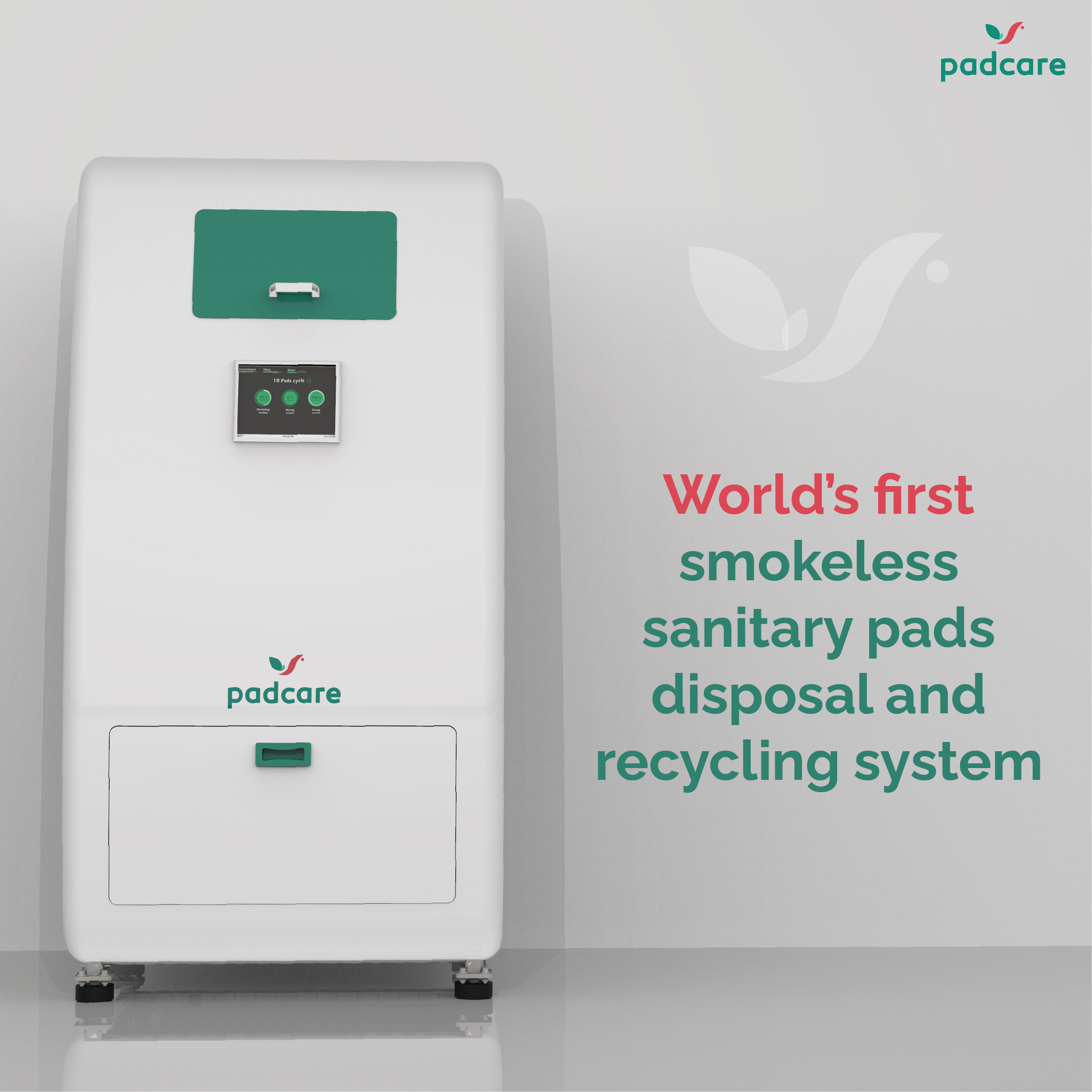
The world's first patented smokeless sanitary napkin recycling system — built by a four-person founding team. Now in 1,800+ workplaces. Featured on Shark Tank India.
India generates 12 billion sanitary napkins a year. 98% of them end up in landfills and water bodies. Drainage pipes clog when they're flushed. When they're incinerated — the current "solution" — they release carcinogenic fumes linked to respiratory infections and cancer. Sanitation workers handle them with bare hands.
A single napkin takes 800 years to decompose. Nobody was designing for this.
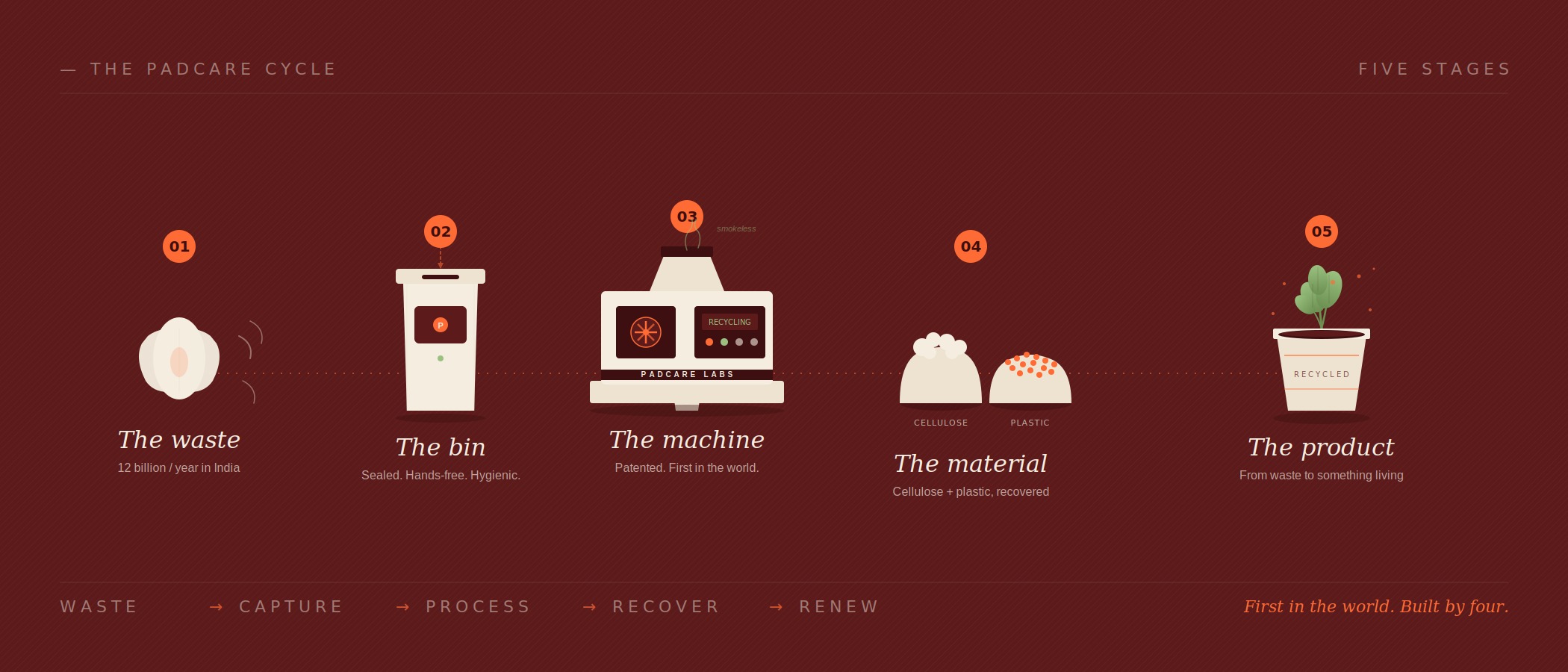
PADCARE/HERO.JPGPadcare started with a CEO, an engineer, a bio-research scientist, and me. My job was to make the science usable — to design the product, the service, and the interface that would let real people interact with patented recycling technology without thinking about chemistry.
I led industrial design (the bin, the packaging, the form factor), service design (the workflow from disposal through collection to recycling), and UX/UI (the operator interface that controls it). The CEO ran business. The engineer ran mechanics. The scientist ran the chemistry. I owned every place a human touched the system.
PADCARE/FOUNDING-TEAM.JPG
PADCARE/EARLY-PROTOTYPE.JPG
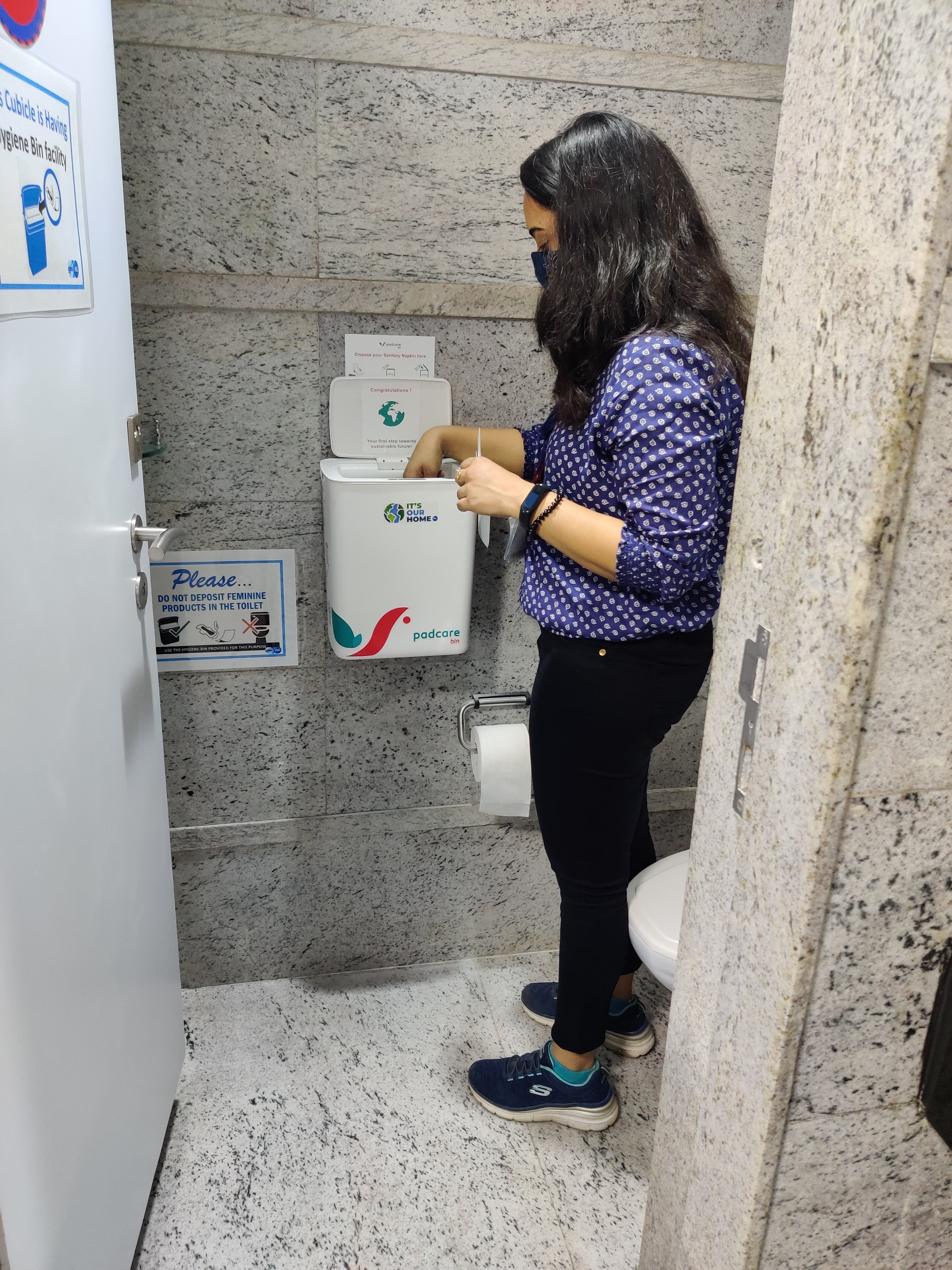
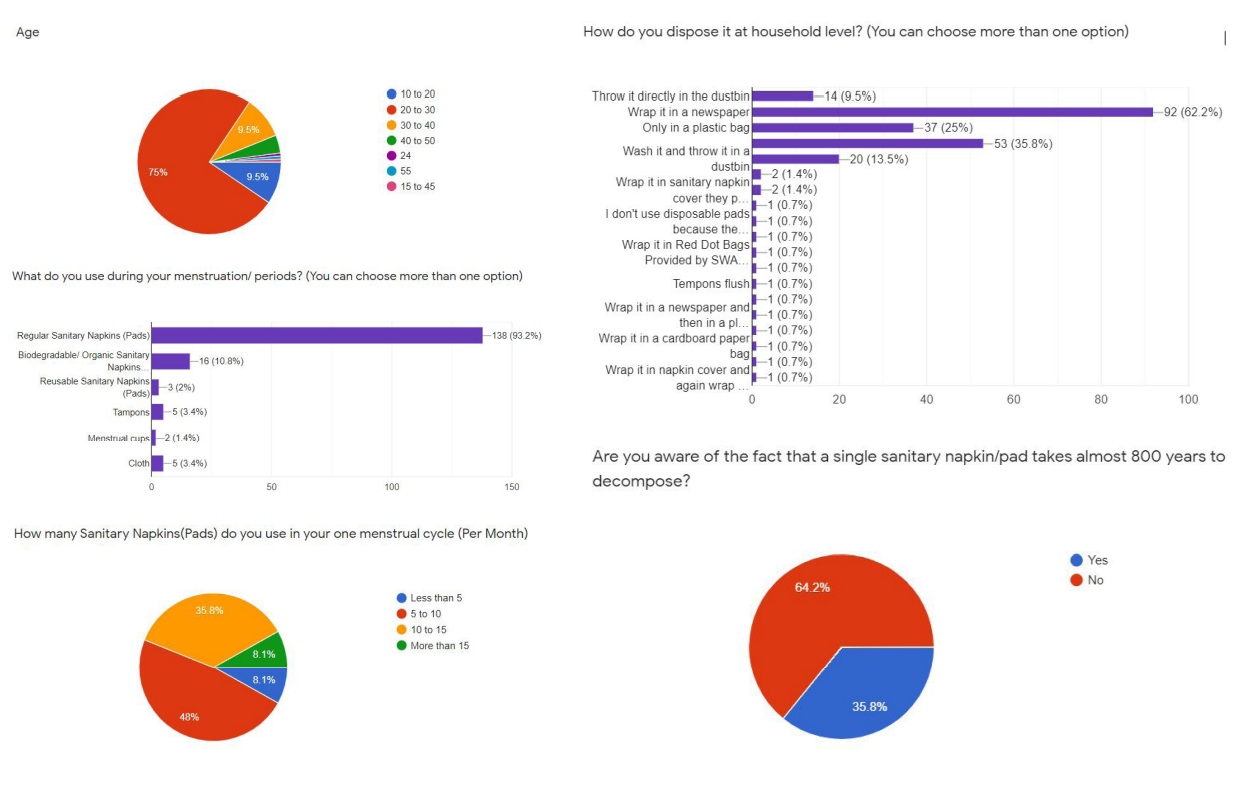
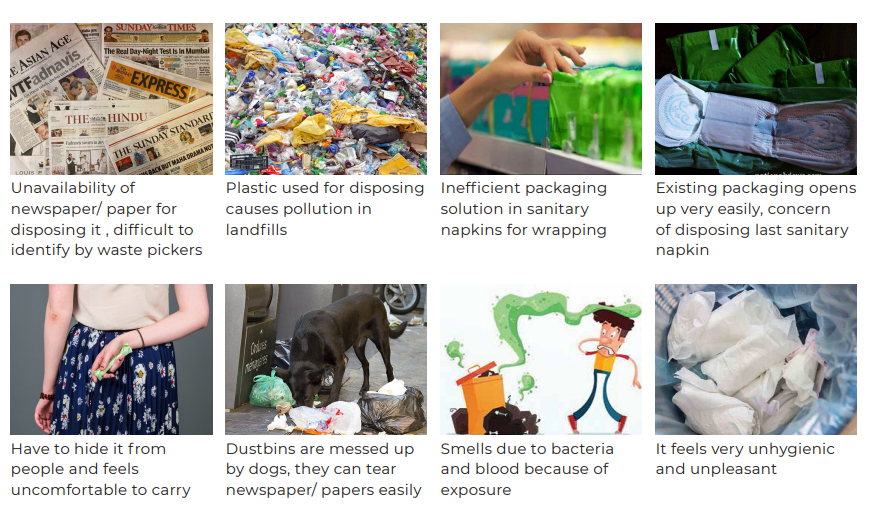
PADCARE/FIRST-INSTALL.JPGRan quantitative research through Google Forms to surface household-level concerns about disposal. Followed up with qualitative interviews to understand the shame, the workarounds, and the safety risks that nobody had named publicly. The combination showed where existing solutions failed and where ours had to land.
PADCARE/SURVEY-DATA.JPG
PADCARE/USER-INTERVIEWS.JPG
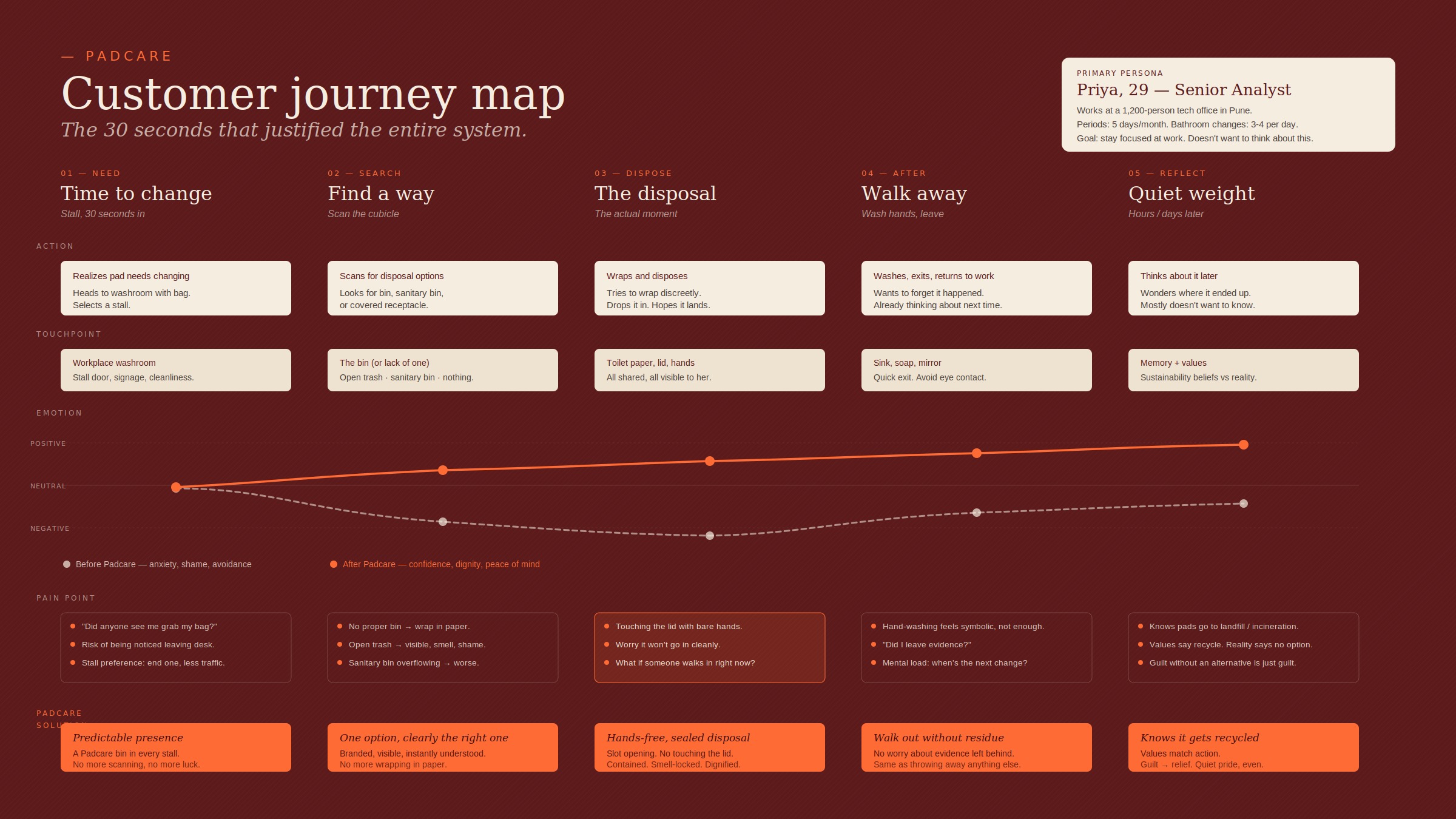
PADCARE/JOURNEY-MAP.JPGThe product had to fit the operator's existing space, support both manual and automatic modes, and look at home in a Mercedes office washroom and a Symbiosis hostel. Every touchpoint — packaging, bin, indicator lights, control panel, collection workflow — had to feel like part of the same system.
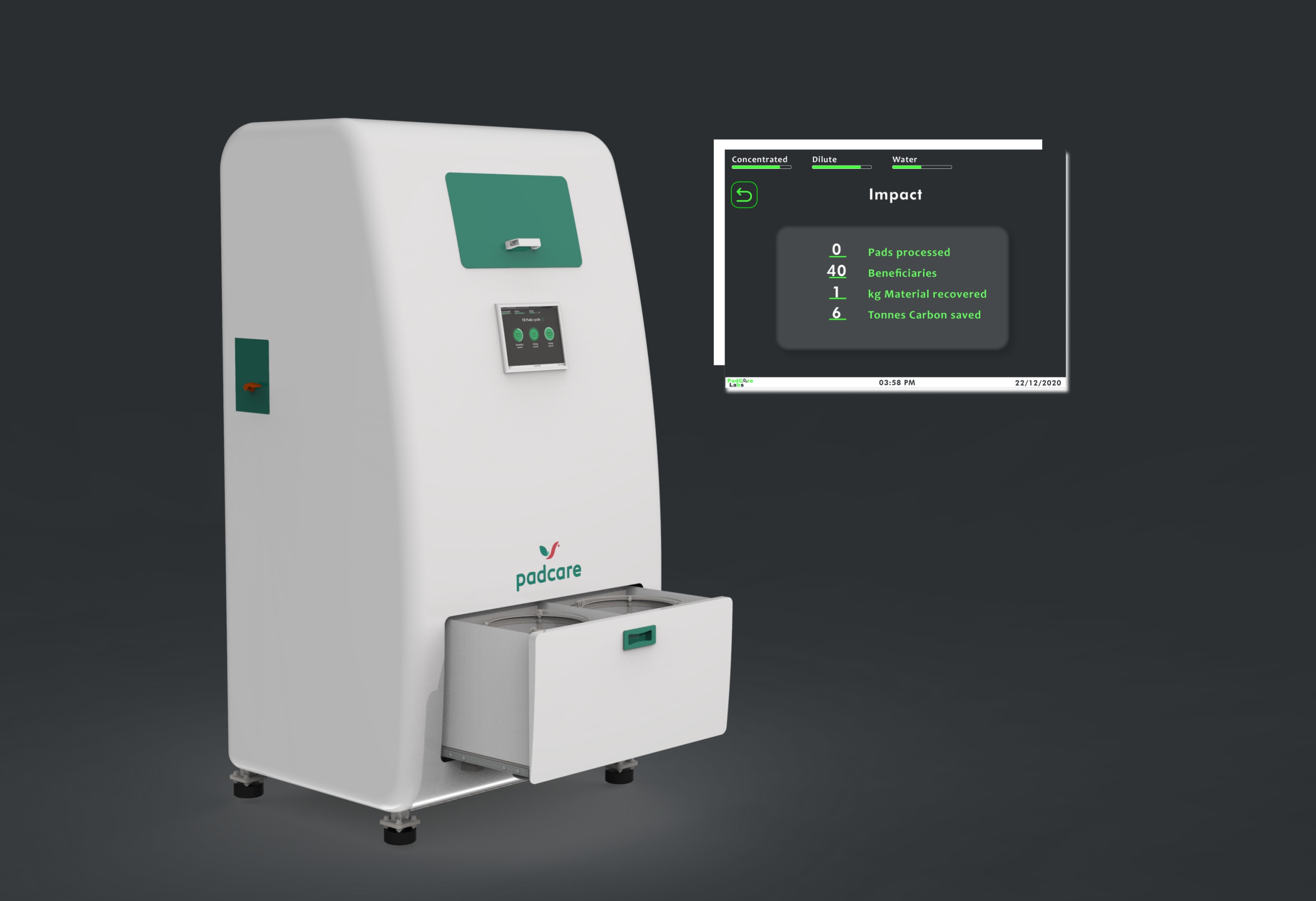
Form factor that fits standard washroom cubicles. Modular pouch system. Tamper-evident packaging.
End-to-end flow from user disposal → bin → collection → recycling. Designed so no one touches waste with bare hands.
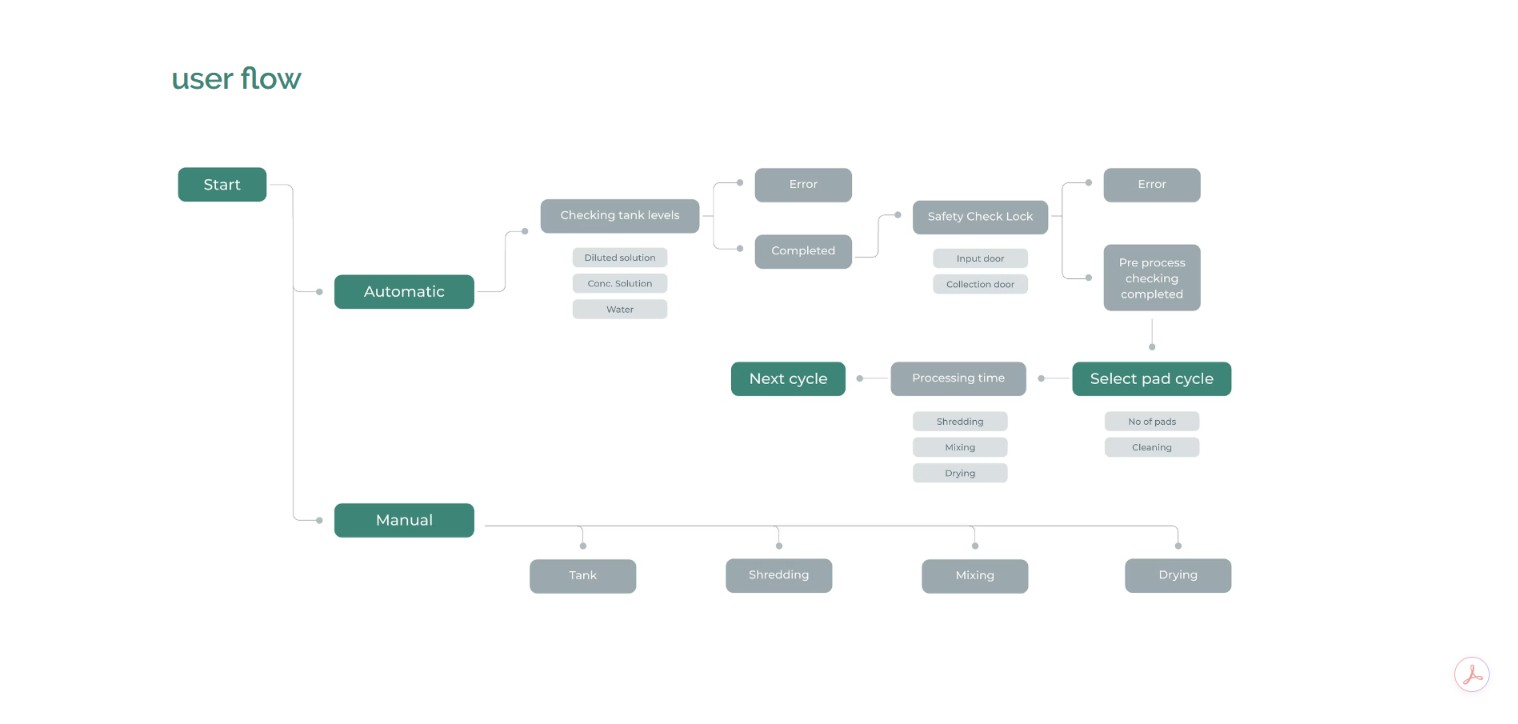
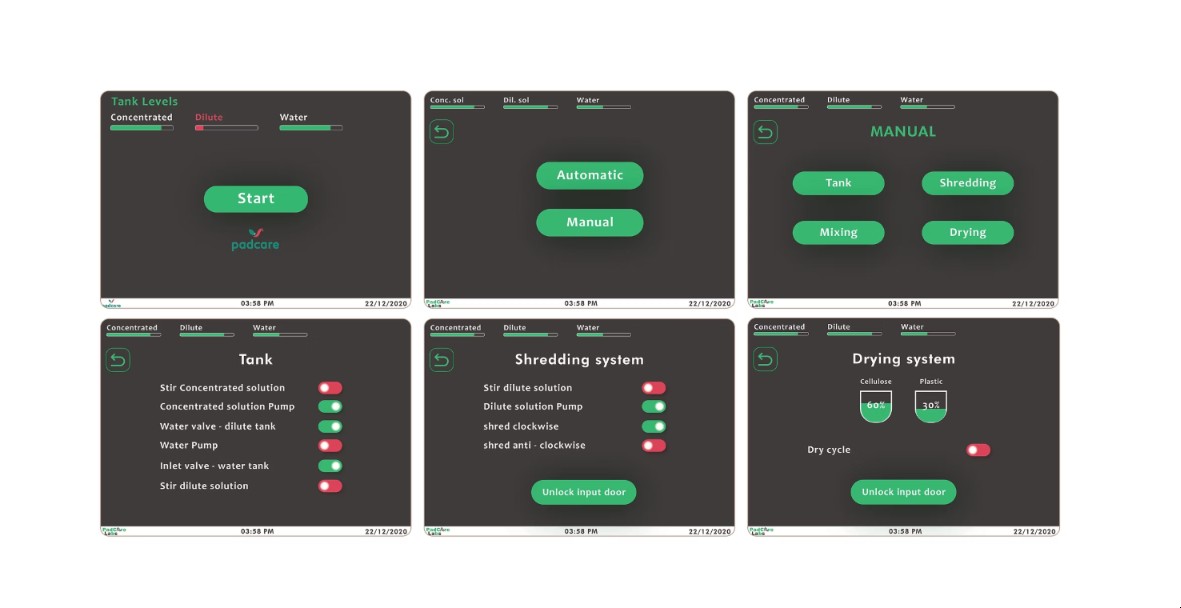
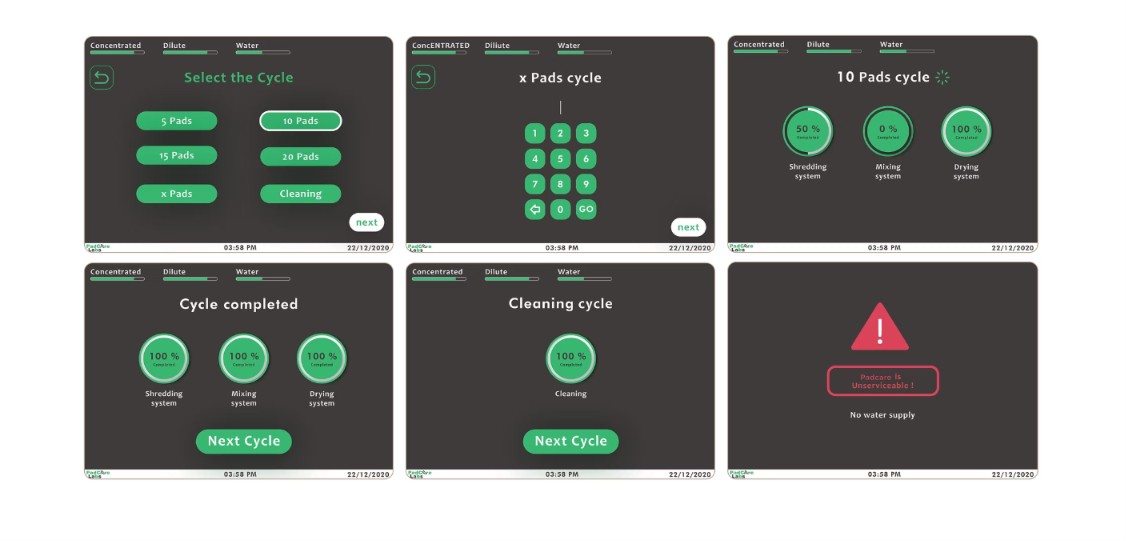
Wireframes for manual + automatic modes. Status indicators, fill levels, service alerts. Made for staff with no tech training.
Visual language across the product, the website, and on-bin signage. Approachable, not clinical.
PADCARE/INDUSTRIAL-RENDERS.JPG
PADCARE/SERVICE-BLUEPRINT.JPG
PADCARE/UI-MANUAL.JPG
PADCARE/UI-AUTOMATIC.JPGFive years later, Padcare bins are in 1,800+ workplaces across India — Meta, Mercedes-Benz, Mahindra, Pfizer, P&G, Grand Hyatt, ICICI Lombard, Bajaj, Volvo, and hundreds more. The company recycles 24 million pads a year and is growing.
From four people in a room to a system reshaping public hygiene infrastructure.
Padcare taught me that the hardest part of designing a system isn't the system — it's the cultural silence around the problem the system solves. Half the work was making it possible to talk about menstrual waste in a corporate buyer meeting without anyone leaving the room.
It also taught me what founding-team design looks like: you don't get to specialize. The product is the service is the brand is the operator UI. You design every surface a human will touch — because if you don't, nobody else will. That lesson is what I now bring to every system I build.
Padcare was my first founding-team build. Bracetek was the second. I'm looking for the third.